Client confidentiality notice: This case study concerns an international cryptocurrency business. The client’s name, domain, logo, and other identifying details have been removed to protect confidential business information. We also do not publish the company’s real name or website so that competitors cannot analyse and copy the strategy developed for this project. 🙂 The results are historical and document an SEO and Generative Engine Optimization project only. This page does not promote or recommend any crypto exchange, crypto asset, staking service, or method of avoiding legally required identity-verification requirements.
Competing for organic visibility in cryptocurrency is difficult for three reasons. Search results are crowded, the subject requires a high level of trust, and users increasingly discover brands through AI-generated answers as well as conventional search pages. For this international exchange, success therefore meant more than achieving a few short-lived keyword positions. The project needed to build a durable organic acquisition system and make useful content easier for search engines and AI answer systems to discover, understand, retrieve, and cite.
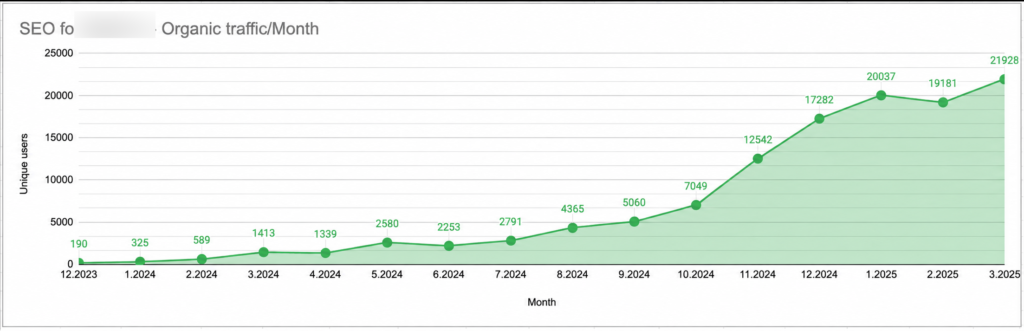
The programme combined technical SEO, search-intent research, content planning, on-page optimisation, internal linking, authority development, structured information, and Generative Engine Optimization (GEO). According to the supplied historical analytics data, monthly unique organic users increased from 190 in December 2023 to 21928 in March 2025. Separate captured examples also documented visibility in Google results and citations or source inclusion in Perplexity and ChatGPT.
The headline result: approximately 115x growth in monthly unique organic users over the measured period, supported by a sustained upward trend rather than one temporary spike.
Results at a Glance
Result area
Historical outcome
Organic acquisition
Monthly unique organic users increased from 190 to 21,928.
Growth multiple
Approximately 115x between December 2023 and March 2025.
Google visibility
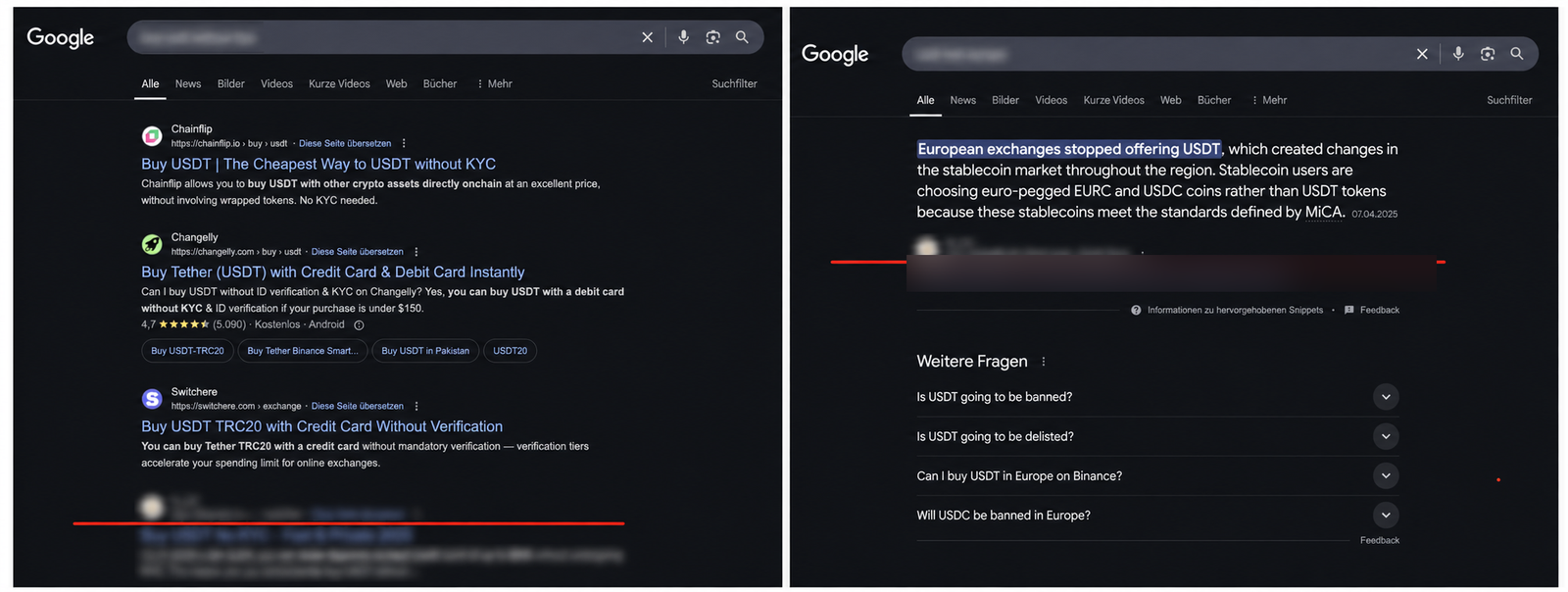
Client pages appeared in captured results for commercial and informational search intent.
Perplexity visibility
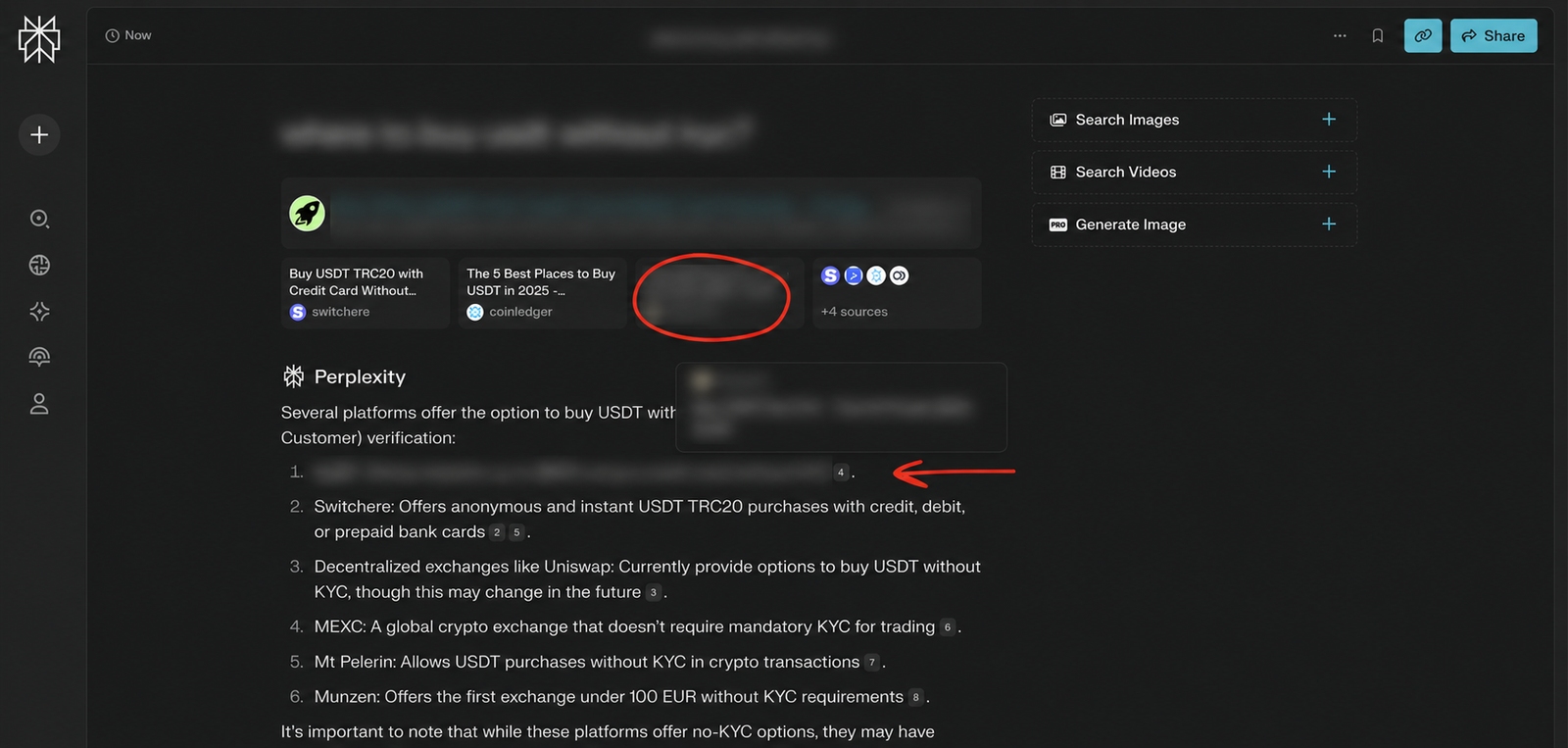
A client page appeared as a cited source in one captured answer.
ChatGPT visibility
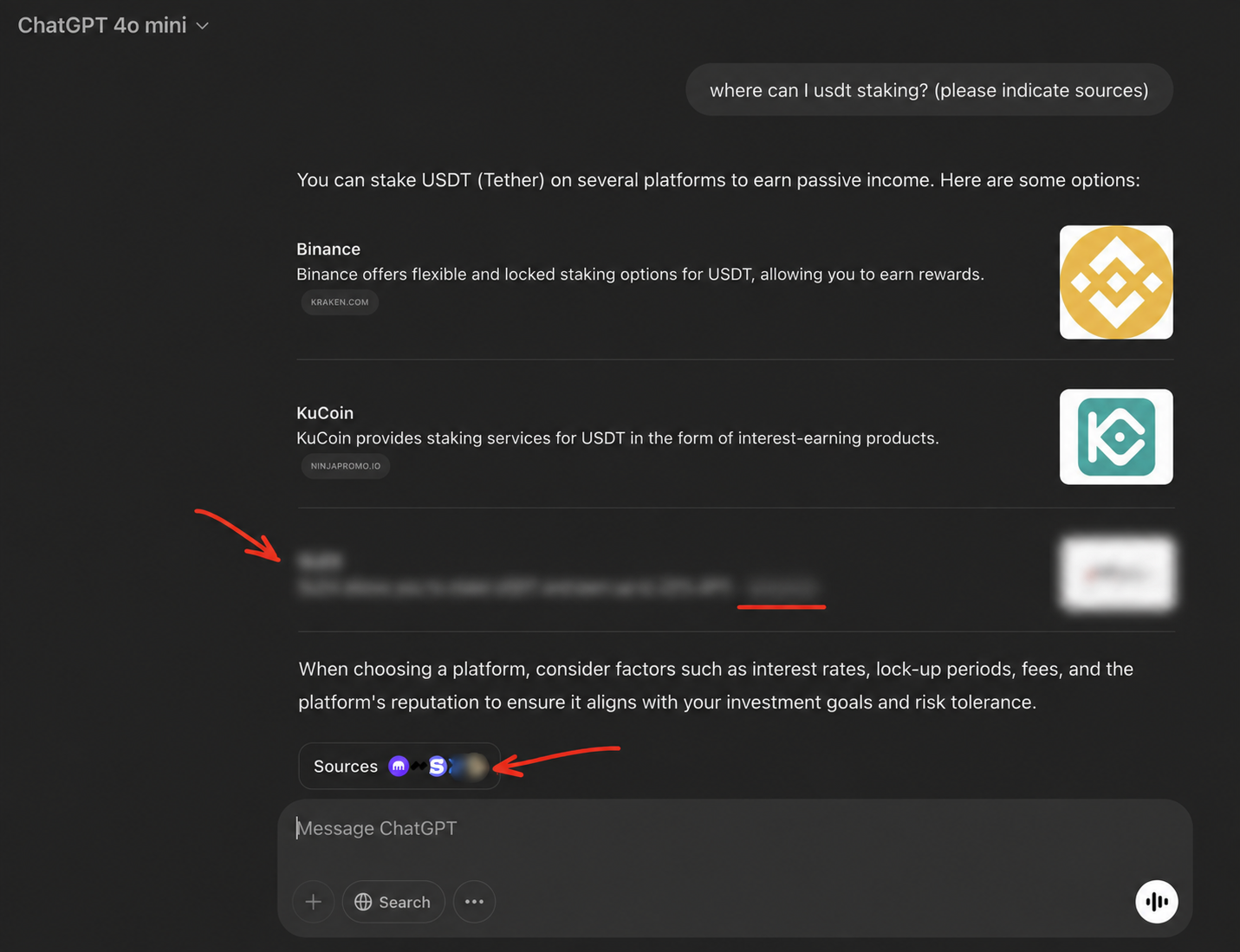
The client and its content appeared in one captured answer with a visible source reference.
These outcomes describe a specific historical project. Search positions, traffic, citations, and AI-generated answers are dynamic and are not guaranteed to remain the same.
The Client and Market Context
The client is an international cryptocurrency exchange. Its potential customers search at several stages of the decision journey: they research market concepts, compare possible solutions, follow regulatory developments, and evaluate providers for a specific need. This creates considerable organic demand, but it also produces unusually intense competition.
Search results in the sector include established exchanges, publishers, comparison platforms, affiliate websites, and specialist media. Crypto and financial topics also require careful handling of accuracy, source quality, risk, and regulatory context. Content that is vague, outdated, or overly promotional may fail both users and search systems.
Discovery was also expanding beyond the traditional search results page. Users were increasingly asking conversational systems direct questions. In that environment, a brand may be encountered inside a synthesised answer before a person visits Google or the company’s website. The project therefore addressed two connected goals:
Increase qualified visibility and traffic from conventional organic search.
Make the client’s useful public content easier for AI answer systems to retrieve and cite accurately.
The Challenge
At the first measured point in December 2023, the website received 190 monthly unique users from organic search. That starting level did not reflect the range of relevant search demand available to the business. Increasing traffic required more than publishing isolated articles or optimising a small set of landing pages.
The website first needed a dependable technical foundation. Important pages then had to match genuine user intent, demonstrate topical depth, and connect logically to supporting resources. Finally, authority signals and machine-readable information had to reinforce consistent relationships between the business, its services, and the topics it covered.
The strategic difficulty was to develop these layers as one system. Technical SEO without useful content would not cover enough demand. Content without crawlability and internal links would struggle to perform consistently. GEO tactics without a strong search foundation would provide AI systems with too little reliable, retrievable material.
The Combined SEO and GEO Strategy
Optis Digital’s work focused on six connected workstreams. Each one supported conventional search performance while improving the clarity and accessibility of the information available to answer engines.
1. Establishing the Technical SEO Foundation
The project began with crawlability, indexation, information architecture, loading performance, mobile usability, canonicalisation, and error handling. The goal was to ensure that important pages could be accessed, understood, and indexed without unnecessary friction.
This foundation matters for GEO as well. AI systems often rely on web search, retrieval infrastructure, and accessible source pages. A useful page that is duplicated, isolated, slow, or difficult to crawl is less likely to become a dependable input for either a search result or a generated answer.
2. Mapping Demand by Search Intent
Research grouped relevant queries by intent rather than concentrating only on the largest head terms. Commercial topics represented users evaluating a solution. Informational topics reached people who were still learning, comparing, or following changes in the market. Brand and navigational topics supported accurate discovery of the company itself.
This broader map created a more complete acquisition funnel. Informational resources could introduce the client earlier, while commercial pages addressed users closer to action. The same coverage also gave answer systems a richer set of focused passages to retrieve for different questions.
3. Improving On-Page Relevance and Site Relationships
Page titles, descriptions, headings, body copy, image alternatives, and internal links were aligned with the purpose of each page. This helped distinguish educational resources from commercial landing pages and reduced ambiguity about the subject of each URL.
Internal linking was particularly important. Supporting articles were connected to relevant hub and service pages, related resources were linked together, and important pages received clearer crawl paths. For people, these connections created a logical route through the topic. For machines, they made the site’s topical relationships more explicit.
4. Building a Scalable Content System
Content was planned as a connected system rather than a sequence of unrelated posts. Each asset had a defined purpose: answer a specific question, explain a market development, support a commercial topic, or strengthen topical coverage around an important entity.
The editorial approach prioritised clear language, direct answers, consistent terminology, and sufficient supporting context. That made the content more useful to readers and easier for retrieval systems to segment and interpret. It also reduced the temptation to rely on generic, high-volume content that added little distinctive value.
5. Adding AI-Readable Signals
The GEO layer included concise answer passages, descriptive headings, structured data where appropriate, focused FAQ sections, and clearer entity descriptions. These elements were designed to reduce uncertainty about who the business was, what each page covered, and how individual claims related to the wider topic.
The objective was not to write mechanically for an algorithm. It was to make accurate information easier to extract without losing the context required by a human reader. Strong passages state the relevant answer, explain it, and connect it to supporting information. Those qualities benefit both conventional search and AI-assisted discovery.
6. Strengthening Relevant Authority
Relevant backlinks, outreach, and third-party mentions reinforced the topics developed on the website. In a competitive and trust-sensitive market, on-site optimisation alone is rarely sufficient. External references help search systems evaluate prominence and can provide additional corroborating signals for answer engines.
The emphasis was relevance and consistency rather than link volume. Off-site activity needed to support the same subject areas, entity associations, and editorial standards established on the client’s own website.
Result 1: Monthly Organic Users Increased Approximately 115x
The clearest measured result was the expansion of organic acquisition. Monthly unique organic users increased from 190 in December 2023 to 21,928 in March 2025. Based on the supplied project data, that equals approximately 115 times the starting level.
Historical project data: monthly unique organic users increased from 190 to 21,928. The client identifier has been redacted.
The progression is significant because growth did not depend on one exceptional month. Traffic developed gradually during 2024 and accelerated in the final quarter:
December 2023: 190 monthly unique organic users.
May 2024: 2580 users.
October 2024: 7049 users.
December 2024: 17282 users.
January 2025: 20037 users.
March 2025: 21928 users.
Monthly traffic remained above 19000 throughout the first quarter of 2025. Although analytics alone cannot assign every increase to a single activity, the sustained pattern is consistent with broader visibility across multiple pages and queries rather than a short-lived ranking event.
Result 2: Visibility Across Commercial and Informational Google Searches
Separate historical screenshots documented client pages appearing in Google for two different types of intent. One result addressed a commercially relevant transaction topic. The other concerned an informational market and regulatory topic.
Historical Google screenshots shown solely to document search visibility. The client’s name, domain, query details, and product-specific information have been redacted.
The distinction between these result types matters. Commercial visibility can reach users who are already evaluating a solution. Informational visibility can introduce a company earlier, while the user is trying to understand a change or research a subject. Covering both stages allows organic search to support immediate demand and longer-term discovery.
The example also shows why blog content and commercial SEO should not operate as separate programmes. A strong informational resource can attract research-stage visitors, earn references, build topical context, and support the site architecture around the pages closest to business outcomes.
Result 3: A Client Page Appeared as a Source in Perplexity
One captured Perplexity answer included a client page among its sources and referenced the client in the generated response. The screenshot has been redacted so that the business, domain, original query, and product-specific wording cannot be identified.
Historical Perplexity screenshot shown solely to document AI-source visibility. Client identifiers and product-specific details have been redacted.
This example documented two related forms of AI visibility at the time of capture:
Source visibility: a page from the client’s website was used as supporting material.
Entity visibility: the client was represented in the generated answer.
A citation may create a visit, but an accurate entity mention can also create awareness before a click occurs. The screenshot records one generated answer only; it does not imply permanent inclusion, a fixed position, or endorsement by the platform.
Result 4: Client Content Appeared in a Captured ChatGPT Answer
Another historical example showed the client and one of its content sources inside a ChatGPT response. The brand, source domain, logo, query, and commercial product statement have been blurred in the supplied publication image.
Historical ChatGPT screenshot shown solely to document AI visibility. Client identity and product-specific information have been redacted.
The example illustrates the practical aim of GEO: to help answer systems recognise when a source may be relevant and to represent it with enough context to support the user’s research. It should not be interpreted as a current recommendation by ChatGPT or as a statement that the same answer will be produced again.
AI responses can change according to the model, date, region, prompt wording, available web sources, product configuration, and personalisation. For that reason, screenshots should be treated as time-bound observations. Ongoing GEO measurement needs repeatable prompts, capture dates, and separate reporting for citations, mentions, and referral traffic.
Why SEO and GEO Worked as One System
This project supports a practical conclusion: GEO is not a replacement for SEO. The strongest inputs for answer-engine visibility were also characteristics of strong search assets—accessible pages, clear intent alignment, useful answers, consistent entity language, structured information, internal relationships, and external authority.
Technical SEO made important information accessible.
Intent research identified questions with genuine demand.
Content and on-page SEO produced focused, understandable resources.
Structured and entity-focused optimisation reduced ambiguity for retrieval systems.
Authority development strengthened recognition beyond the client website.
Conventional search generated measurable discovery and traffic. GEO extended the same foundation into environments where users receive a synthesised response instead of a list of links. The two disciplines addressed different parts of the same customer journey and shared much of the same underlying work.
Lessons for Crypto, Fintech, and Other Competitive Markets
Build the foundation before chasing AI mentions. Crawlability, indexation, architecture, and content quality remain essential.
Cover the complete research journey. Informational content creates context and reach; commercial pages address active demand.
Make important information easy to retrieve. Direct answers, descriptive headings, FAQs, structured data, and consistent terminology improve clarity.
Maintain editorial and regulatory discipline. Sensitive-market content needs accurate wording, current sources, clear limitations, and a review process.
Treat external recognition as part of the system. Relevant mentions and links can reinforce the relationship between an entity and its subject area.
Measure SEO and GEO separately. Organic users and rankings show one part of performance; citations, mentions, and AI referral traffic show another.
Document dynamic results. Store the prompt, platform, model where visible, capture date, region, and screenshot so an AI observation can be interpreted correctly later.
Frequently Asked Questions
Why is the client anonymous?
The name, domain, logo, and identifying product information have been removed to protect confidential business information. The anonymous presentation allows the case study to explain the SEO and GEO approach without publicly identifying the cryptocurrency business.
What results were recorded?
The supplied historical analytics data shows monthly unique organic users increasing from 190 in December 2023 to 21,928 in March 2025, approximately 115x. Separate screenshots documented Google visibility and source inclusion in captured Perplexity and ChatGPT answers.
How long was the measured traffic period?
The traffic chart covers December 2023 through March 2025. The search and AI screenshots are separate historical observations and should not be assumed to represent the same measurement date as the analytics chart.
What is Generative Engine Optimization?
Generative Engine Optimization is the practice of improving how clearly and reliably a brand’s public information can be discovered, retrieved, cited, and represented by AI answer systems. It can include technical accessibility, entity clarity, answer-focused content, structured data, source quality, authority, and systematic monitoring.
Does GEO replace traditional SEO?
No. GEO generally works best on top of a sound SEO and content foundation. Accessible pages, clear information architecture, relevant content, and trustworthy external signals can help both search engines and AI retrieval systems find and interpret information.
Can another website expect the same results?
No. SEO and GEO outcomes cannot be guaranteed. Performance depends on the website’s starting condition, competition, search demand, resources, implementation, regulation, algorithm changes, and the behaviour of individual AI platforms. This article documents one historical project.
Build Visibility in Search and AI Answers
Optis Digital helps crypto, blockchain, fintech, SaaS, and other competitive brands build organic acquisition systems and prepare useful public content for AI-assisted discovery.
With years of experience navigating the ever-evolving crypto landscape, Eugen knows exactly how to make content shine in Google’s eyes—without breaking the algorithm. With experience working as an SEO specialist in real fast-growing crypto companies, along with training in crypto trading, Google Ads Search Certification, and Google Analytics Individual Qualification, he is a master of SEO in the crypto world, blending AI-powered strategies with deep industry knowledge. From ChatGPT to blockchain trends, he knows how to make content rank, engage, and convert.